

Choosing an outdoor storage shed starts with the items you need to store, the space available and the installation requirements of the exact model. Use these five checks before ordering a shed kit.
1. Measure the space and choose the right shed size
A storage shed might be useful when the garage and attic is starting to fill up and you don’t know where else to put your things. When thinking about buying a storage shed, it is important to map out your backyard to see what are the size options you have available. Keep in mind that the pathway to your backyard is just as important as placement. Fortunately sheds come in all types of sizes and shapes so they can accommodate anyone’s backyard.
2. Check placement requirements before preparing the site
The first step in your preparation process is to see if you have permission for an outdoor shed. Some regulations have specific restrictions on what you can put in your backyard or colors you can have. Check in with your local zoning ordinance to see what you’re working with.
Compare DuraMax vinyl storage sheds and metal storage sheds, then use Find a Dealer for purchasing options.
3. Confirm delivery and installation access
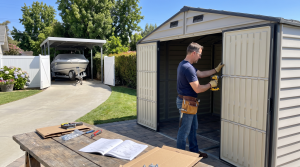
Checking your backyard access space is the first step. Another detail to notice is if there is any overhead around your property that may obstruct the shed’s delivery. Checking for low tree branches, power lines, or buildings that might block the access of a shed is important. Confirm whether the order is a shed kit or an assembled structure, where the carrier will unload it, and the access needed to move the components to the installation area. Use the dealer’s and carrier’s actual clearance requirements rather than a fixed allowance.
4. Check underground services and access needs
Before setting the placement area for your shed, keep note if there are any utility lines under the shed’s planned area. Once installed, it may be a nuisance if a utility line has to be repaired and your shed is obstructing it. You can contact the utility company or city hall to find utility easements.
5. Plan the base, drainage and ventilation
Humidity may be a threat to your shed if placed in an area that is too damp. Finding the right type of ventilation or climate that prevents mold from forming is a good idea. Think about how your yard is during dry season and wet season. Your shed’s foundation should not be where water builds up.
Compare the floor system and actual model specifications
Some shed models include a molded floor; others include a foundation kit or need a separate floor solution. A foundation kit is not the same as a finished floor. Follow the model’s installation manual for base preparation and anchoring, and compare its actual exterior dimensions, interior dimensions and clear door opening with what you plan to store.
For a narrow site, explore narrow and side-yard sheds. For another footprint, compare backyard storage sheds and large storage sheds. Review the installation guides and contact an authorized dealer to confirm the selected model’s availability, delivery arrangements and included components.