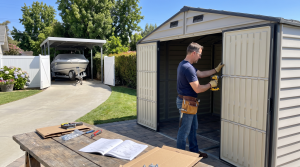


November is a useful time to give your outdoor storage shed a seasonal check. Summer equipment is moving into storage, holiday decorations are coming out, and rain or snow may be approaching. A little preparation now can make the shed easier to use throughout winter.
This fall checklist covers the roof, drainage, doors, ventilation and storage layout. Use it alongside the installation manual for your exact DuraMax model, especially when checking anchoring or weather-load requirements.
Quick winter shed checklist
- Check the roof and surrounding area for fallen leaves and debris.
- Look for standing water and drainage problems around the base.
- Inspect doors, hinges, fasteners and the installed anchoring system.
- Keep ventilation openings clear.
- Dry outdoor items before putting them away.
- Place frequently used winter items near the entrance.
- Review your model’s snow-care instructions before the first snowfall.
1. Start with the roof and surrounding trees
From ground level, look for leaves, twigs and other debris on the roof. DuraMax’s care and maintenance guidance recommends a long-handled, soft-bristled broom for roof debris and snow. Never stand or walk on the shed roof.
Check nearby vegetation for branches touching the building or making access difficult. If a branch is large, overhead or difficult to reach, arrange appropriate help. Include the path to the shed in your cleanup so you can reach the entrance when the weather changes.
2. Check drainage around the base
Visit the shed after rain and look for puddles beside the foundation, water collecting at the threshold or runoff flowing toward the building. Clear loose leaves from existing drainage routes. Keep soil, mulch and stored materials from building up against the base.
Recurring standing water deserves attention before more belongings go into storage. The supporting base and drainage should follow the installation instructions for the specific shed and the conditions at your site. Avoid adding a raised border or landscaping feature that traps runoff around the structure.
3. Inspect doors, fasteners and anchoring
Open and close the doors before rearranging the interior. Check that stored items do not obstruct the doorway, and inspect visible screws, bolts and hinges for looseness or damage. DuraMax recommends periodic fastener checks and keeping the doors closed to reduce wind damage.
Inspect the existing anchoring against your model’s assembly instructions. If doors have started binding or gaps have changed, investigate the cause rather than forcing the door. Foundation movement, obstructions or loose components may need attention. Use the installation and parts guides to identify the correct components before arranging a repair.
4. Keep ventilation clear and manage damp belongings
Changing temperatures can cause condensation inside an outdoor shed. DuraMax’s care guidance identifies ventilation as part of managing moisture, so keep designed vents unobstructed. Avoid packing bins or cushions tightly against ventilation openings.
Brush soil from garden tools, let washable items dry fully and check the care labels on outdoor cushions before storing them. A closed container will not dry a damp item. Leave enough room to inspect belongings and notice moisture problems early.
If you find water inside, check when and where it appears. Moisture beneath a roof joint after rain needs a different investigation from droplets forming across surfaces during temperature changes. Locate the source before applying sealant or modifying the shed.
5. Reset the layout for winter access
Move the items you will use first toward the entrance: holiday decorations, frequently used hand tools or snow-removal equipment where relevant. Put less-used summer accessories farther back, while keeping a clear route through the shed.
Label storage bins on the side facing the aisle. Keep heavy items low on suitable storage furniture, following its load limits. Do not lean equipment against shed wall panels or attach shelves and hooks without checking the model’s approved mounting instructions.
If the layout only works when the entrance is blocked, reconsider what belongs in the space. Our storage shed size guide can help you assess capacity. For restricted outdoor spaces, see the narrow side-yard planning guide.
6. Review what should stay somewhere else
An outdoor shed’s interior conditions affect what you can store there. Check storage requirements for paints, adhesives, electronics, batteries and other temperature-sensitive belongings. Follow equipment manufacturers’ instructions for seasonal storage of mowers and powered tools.
DuraMax’s care guidance says swimming pool chemicals should not be stored in the building. Follow product labels and applicable storage requirements for any hazardous materials; do not assume an ordinary garden shed is a suitable location.
7. Make a plan for snow and storm checks
In snowy areas, review your model’s instructions before winter weather arrives. Roof-load specifications and maintenance requirements vary by product. Do not apply a rating from another shed to your building or convert a published load rating into an assumed safe snow depth.
After significant weather, check the shed from a safe position for visible damage, displaced components or obstructed access. Arrange professional help when roof conditions or damage make inspection or snow removal unsafe.
Frequently asked questions
Should I seal the vents for winter?
Keep the shed’s designed ventilation openings clear. Consult the model manual before changing any vent or sealing detail.
Can outdoor cushions stay in a shed all winter?
Check the cushion manufacturer’s storage instructions and your shed’s interior conditions. Clean and dry cushions completely first; move them to a suitable indoor location if their care requirements cannot be met.
Does a vinyl shed still need seasonal checks?
Yes. Seasonal checks include the roof, drainage, doors, fasteners and anchoring. The material does not replace the need to follow the product’s care instructions.
Get your shed ready for the season
Start with a walk around the building, then work through the interior one section at a time. Keep your model number handy and consult the DuraMax installation and parts guides for product-specific details.
Planning a new storage space? Read our complete outdoor storage shed buying guide, then find an authorized DuraMax dealer to discuss availability and delivery options.