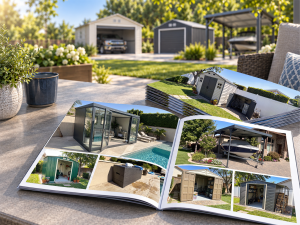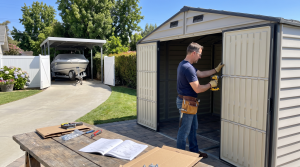


Choosing a storage shed by its advertised dimensions alone is one of the easiest ways to buy too little space—or pay for more shed than your yard needs. A 4×8 side-yard shed, a 6×6 compact walk-in shed, an 8×8 utility shed and a 10×8 backyard shed solve different problems. This guide helps you match the footprint to what you actually need to store, the path you need to access it and the room available on your property.
Quick answer: which shed size is right for you?
For a narrow side yard, start with a 4×8 or 4×10 class shed. For garden tools and a modest collection of outdoor supplies, consider a 6×6 or 7×7 class shed. For a walk-in equipment area, compare 8×8 and 10×8. If you want separate zones for bicycles, yard equipment and seasonal storage, investigate a 10×10 or larger layout.
Important: These are shopping-size categories, not promises about the interior dimensions of any particular product. Exterior roof overhangs, wall construction, doors and usable floor area vary by model. Use the product’s actual dimension drawing and installation instructions before purchasing.
Storage shed size comparison
| Nominal size class | Nominal footprint | Often suitable for | Check carefully |
|---|---|---|---|
| 4×8 | 32 sq. ft. | Narrow side yards, long-handled tools, small garden equipment | Door position, access path and usable interior depth |
| 4×10 | 40 sq. ft. | Side-yard storage needing a little more length | Turning space and clearance along the property line |
| 6×6 | 36 sq. ft. | Compact garden storage, pots, hand tools and supplies | Whether shelves leave a usable walkway |
| 7×7 | 49 sq. ft. | Compact walk-in storage with more organization options | Door opening and whether a finished floor is included |
| 8×8 | 64 sq. ft. | Garden equipment plus bins and seasonal items | Door width, ceiling clearance and wall shelving limitations |
| 10×8 | 80 sq. ft. | Multiple bicycles, lawn equipment and household overflow | Arrangement of large items and access aisle |
| 10×10 | 100 sq. ft. | More extensive backyard storage with distinct zones | Foundation cost, site setbacks and delivery access |
The square-foot figures above are simple length-times-width calculations using nominal dimensions; they are not verified interior floor-area specifications. Likewise, an item might fit on paper but be difficult to move through the door. Check exact dimensions before relying on any size class.
Step 1: measure the items you actually own
Make an inventory of everything going into the shed. Group items into long-handled tools, wheeled equipment, bikes, outdoor cushions, storage totes and seasonal decorations. Measure the longest, widest and tallest objects—not just their approximate category sizes. A mower with its handle extended or a bicycle with handlebars can require more clearance than expected.
- Footprint: Record each large item’s real length and width, including handles and protrusions.
- Door clearance: Check the largest item against the manufacturer’s clear door opening, not the outside door-frame size.
- Access route: Reserve a clear route to frequently used items. A shed filled wall-to-wall is not necessarily usable storage.
- Height: Measure tall tools, shelving and anything that must be raised or tilted to move.
- Growth: Leave some additional capacity if you expect to buy equipment or expand your collection.
Step 2: decide whether a long, narrow shed or a wider shed fits better
4×8 and 4×10: storage for a side yard
A shallow shed can take advantage of space beside a house that might otherwise be underused. The DuraMax SideMate 4×8 vinyl shed and SideMate 4×10 vinyl shed are useful starting points for comparing narrow-footprint designs. Consider the 4×10 Adobe version if color matters to your planning. Door orientation and door-swing space should drive the selection: a side yard can be long enough for a shed but too narrow to comfortably open its doors or maneuver an item inside.
Check your municipality’s setback rules and utility easements before placing storage along a fence or house wall. Avoid blocking vents, utility meters, emergency access, drainage or maintenance routes.
6×6 and 7×7: compact walk-in organization
A nearly square footprint often makes it easier to arrange shelving and keep a central access zone. This size range can work well for gardening supplies, hand tools and a selection of bins, but it is not automatically suitable for large riding equipment. The StoreMax Plus 7×7 illustrates an option worth comparing when you want more room to organize items within a relatively compact footprint. Verify which base and floor components are included on the precise model.
8×8: a step toward general-purpose storage
An 8×8 class shed can accommodate a more varied mix of storage than a small side-yard unit, especially when the door position allows a useful central aisle. The DuraMate 8×8 vinyl shed is a relevant model to review for this size category. Measure equipment and check the product’s actual internal floor dimensions before making a fit decision.
10×8: a practical larger backyard footprint
A 10×8 class shed is worth considering when you need space for several categories of equipment without stacking everything in front of the door. Compare the WoodBridge 10×8 vinyl shed and the WoodSide 10.5×8 vinyl shed. Their configurations differ, so compare door openings, windows, ventilation, actual floor area, base requirements and current installation manuals rather than assuming similar advertised dimensions mean identical usable space.
10×10 and larger: storage zones and future flexibility
For multiple bicycles, lawn and garden equipment, patio furniture and household overflow, a wider or deeper layout can make separate zones practical. The WoodBridge 10×10 and WoodBridge 10×13 provide two larger classes to compare. The larger the shed, the more important the site plan becomes: base preparation, drainage, delivery access, setbacks and local permit requirements all deserve a check.
Step 3: sketch the floor layout before making your decision
On graph paper—or a simple digital drawing—draw the shed’s usable interior outline at scale. Add the mower, bicycles, benches, shelving and totes in their planned positions. Show door swing and the route you must walk or roll equipment through. Try a layout with frequently used tools nearest the entrance and occasional-use items toward the back.
Think in zones, not just total square feet. For example: one zone for yard tools, one for bicycles, one for bins and an unobstructed route through the middle. Do not count on hanging heavy items from the shed walls unless the manufacturer explicitly approves the load and mounting method.
Step 4: measure the yard, not just the storage area
Measure the clear, level area available for the shed, along with roof overhang clearance, door swing, access for assembly and access for maintenance. Identify trees, roots, low branches, drainage paths, fences, nearby structures and buried or overhead utilities. Confirm local setbacks, applicable permits and HOA rules. A nominal 10×8 shed may require a site larger than 10×8 to allow safe assembly and service access.
Step 5: understand floors, foundations and anchoring
A foundation frame, a finished floor and an anchoring system are not interchangeable. A product may include one but not the others. Consult the model-specific packing list and instructions before budgeting for a concrete slab, an approved base or other support. The base must be level, stable and appropriately drained; anchoring must follow the manufacturer’s specifications and local requirements.
Step 6: consider access, climate and upkeep
Look beyond the footprint. Doors should be wide enough for the objects being moved. Windows and ventilation can improve usability but may affect your preferred interior wall layout. Review the particular shed’s instructions for wind and snow limitations, anchoring, ventilation and site suitability. Do not infer one model’s load rating from a different size or family.
Vinyl storage sheds generally avoid the routine painting or staining associated with unfinished wood, although cleaning, hardware checks and proper installation still matter. Compare materials on maintenance needs and construction details rather than treating all vinyl, resin or metal sheds as equivalent.
Common mistakes when choosing a shed size
- Comparing advertised footprint to item footprint: You need maneuvering room as well as space to park the equipment.
- Ignoring the door: Door opening, orientation and approach can make or break the layout.
- Assuming the floor is included: Confirm the packing list and foundation requirements.
- Forgetting setbacks and drainage: Measure the installation site and check local restrictions before ordering.
- Choosing entirely for today’s storage: Consider reasonable growth without oversizing your shed unnecessarily.
- Assuming nominal dimensions are exact: Always review current product drawings.
Frequently asked questions about storage shed sizes
Is a 4×8 shed big enough for a lawn mower?
It may be, depending on the mower dimensions, handle configuration, door opening and what else you plan to store. Measure your mower and check the shed’s actual interior and doorway dimensions. Do not use nominal square footage alone to decide.
Is a 6×6 or an 8×8 shed better?
A 6×6 class shed may be adequate for a compact collection of tools and supplies; an 8×8 class gives you a larger nominal footprint and potentially more flexible organization. The better choice is the smallest layout that fits all items with a practical access aisle and appropriate site clearance.
How much bigger is 10×8 than 8×8?
Using nominal dimensions, 10×8 is 80 square feet versus 64 square feet for 8×8, a difference of 16 nominal square feet (25% more). Actual usable interior areas may differ from this comparison.
Do I need a permit for a 10×10 shed?
Requirements vary by jurisdiction and may depend on size, height, location, foundation and intended use. Contact your local building department and review HOA requirements before beginning site preparation.
Can I use a storage shed as an office or living space?
Do not assume an outdoor storage shed is approved for occupancy. A conditioned office or habitable space can involve different building, electrical, ventilation, insulation and permitting requirements. Select a product designed and approved for the intended use.
Explore DuraMax sheds and find an authorized retailer
Start with the SideMate 4×8 for a narrow side yard, StoreMax Plus 7×7 for compact walk-in organization, DuraMate 8×8 for general-purpose storage, or WoodBridge 10×8 for a larger backyard arrangement. Review detailed specifications on each product page and the current installation guide.
For a broader comparison of shed materials, foundations and buying considerations, see our Complete Outdoor Storage Shed Buying Guide. To purchase, use our Find an Authorized Dealer directory. Prices, inventory and delivery options vary by retailer.